How a Gas-Liquid Separation System Protects Your Vacuum Pump
Is your vacuum pump being eroded by water vapor, cutting fluid, beer, or juice?
Whether your vacuum system operates on CNC machining equipment, beer production lines, or beverage filling machines, liquid ingress is a silent killer. It causes corrosion, internal wear, and unexpected downtime.
Watch the video below to see how the Wordfik Gas-Liquid Separation System protects your vacuum pump, followed by a detailed breakdown of its working process using a CNC machining application as an example.
Detailed Working Process: A CNC Machining Example
When a CNC machining center is running, liquid and debris are inevitable. Here is a step-by-step breakdown of how our automated system isolates and removes cutting fluid before it can reach your pump.
Step 1: Initial Separation (See Image 1)
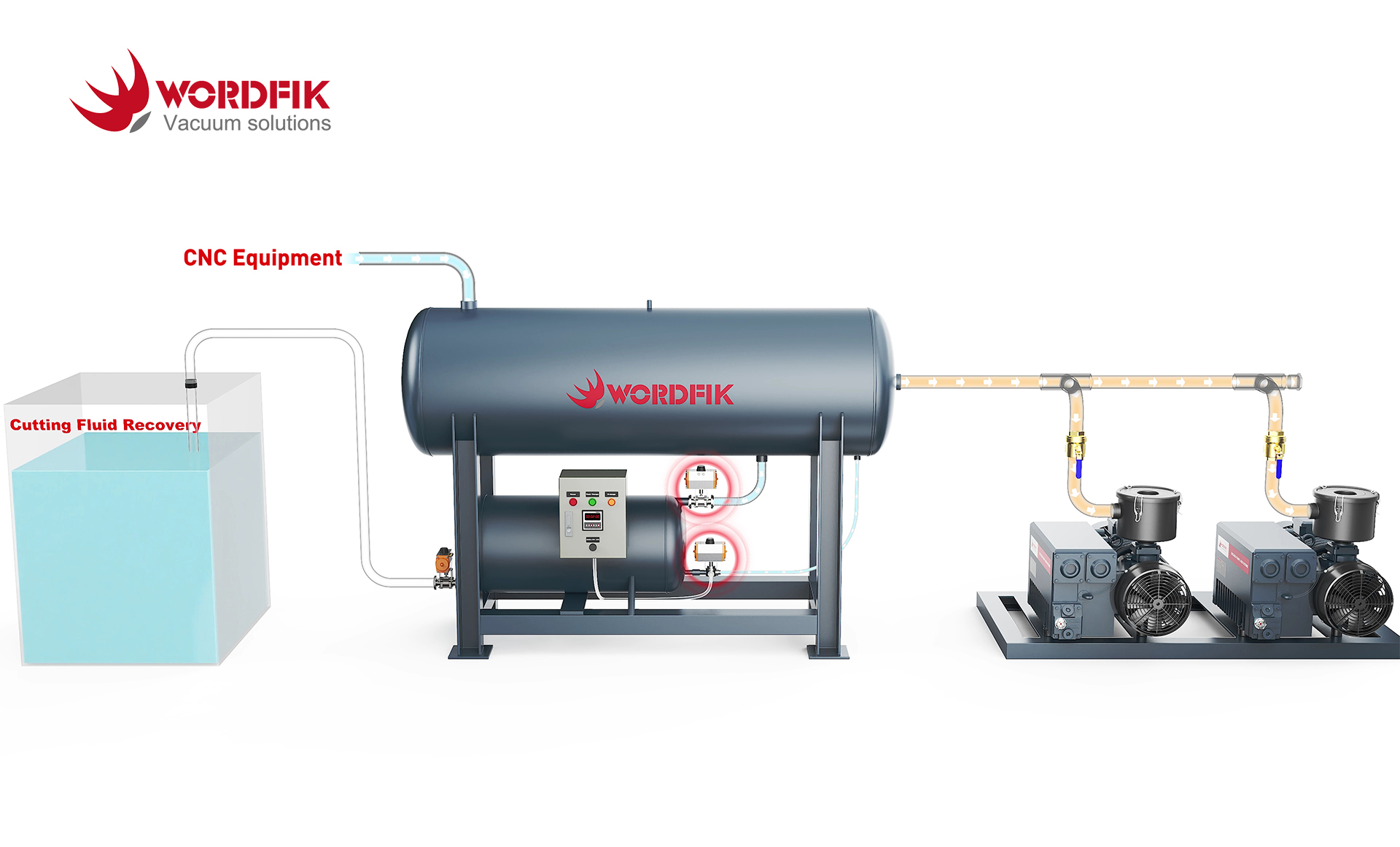
When the CNC equipment starts working, the vacuum pump and the gas-liquid separation system start simultaneously. The cutting fluid and air mixture are drawn into the primary storage tank. The primary tank uses gravity to separate the heavier liquid from the air. The air continues through the intake pipe into the vacuum pump, while the separated cutting fluid falls to the bottom. During this phase, the solenoid valve connecting the primary and secondary storage tanks remains open, allowing the liquid to flow into the secondary tank.
Step 2: Level Sensing (See Image 2)
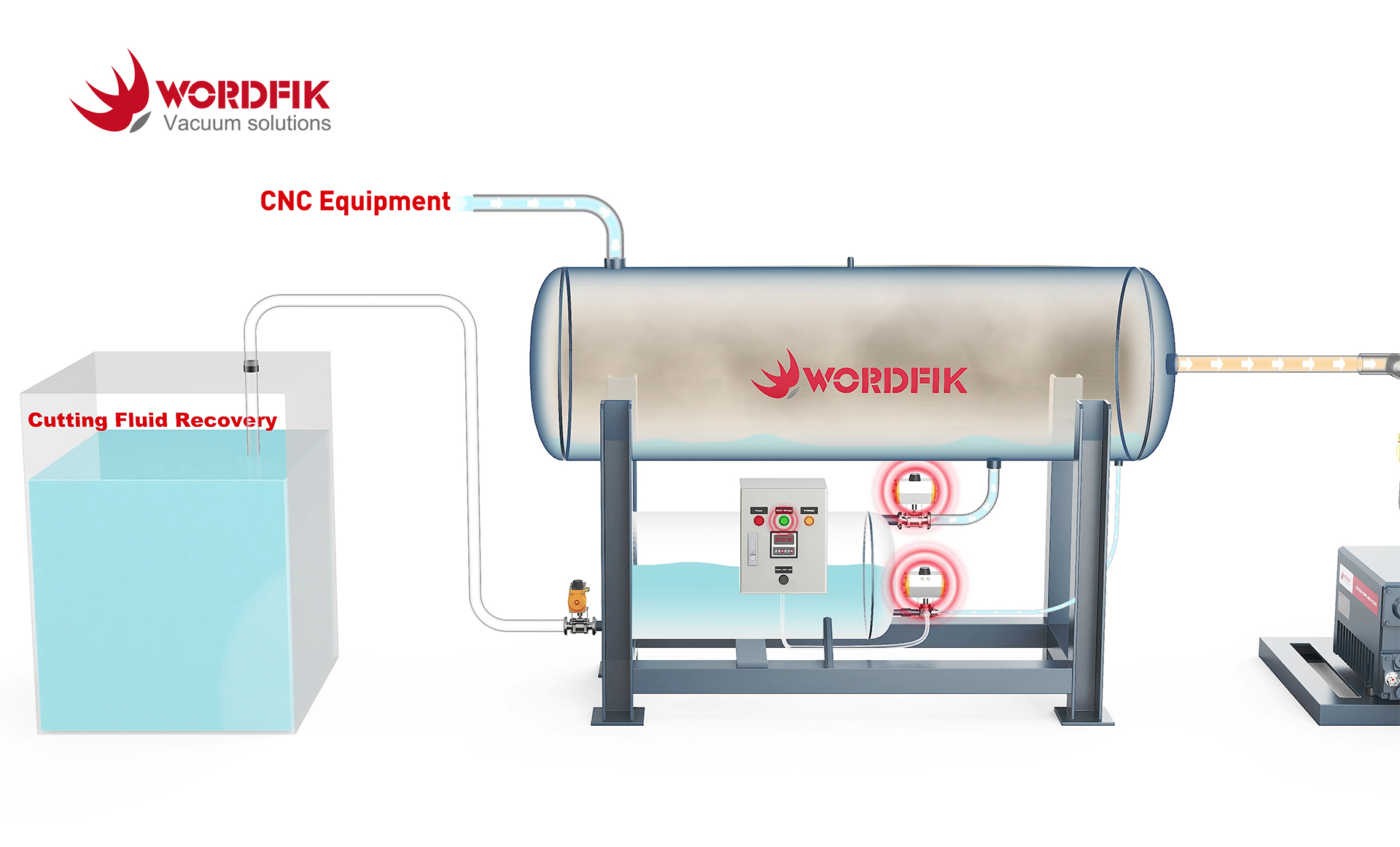
As the process continues, the liquid level in the secondary storage tank gradually rises. Once the liquid reaches a certain level, it triggers the liquid level sensor. This sensor acts as the trigger for the automated drainage sequence.
Step 3: Automated Draining (See Image 3)
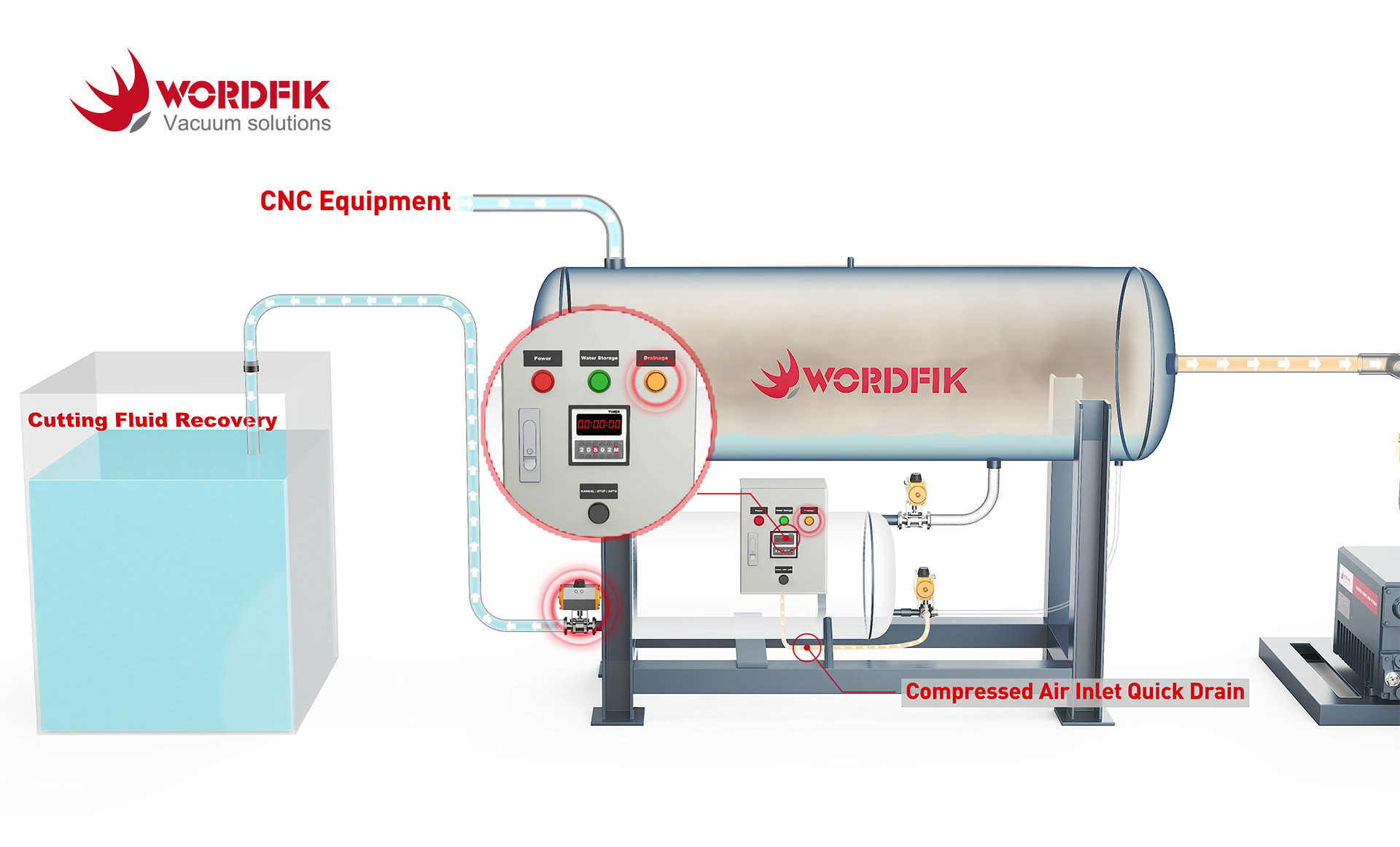
When the sensor is triggered, the system automatically opens the solenoid valve connecting the secondary tank to the final cutting fluid recovery box. Simultaneously, the valve connecting the primary and secondary tanks closes. The captured cutting fluid is safely discharged into the recovery box, completely isolated from the vacuum pump.
Step 4: Pressure Equalization and Reset (See Image 4)
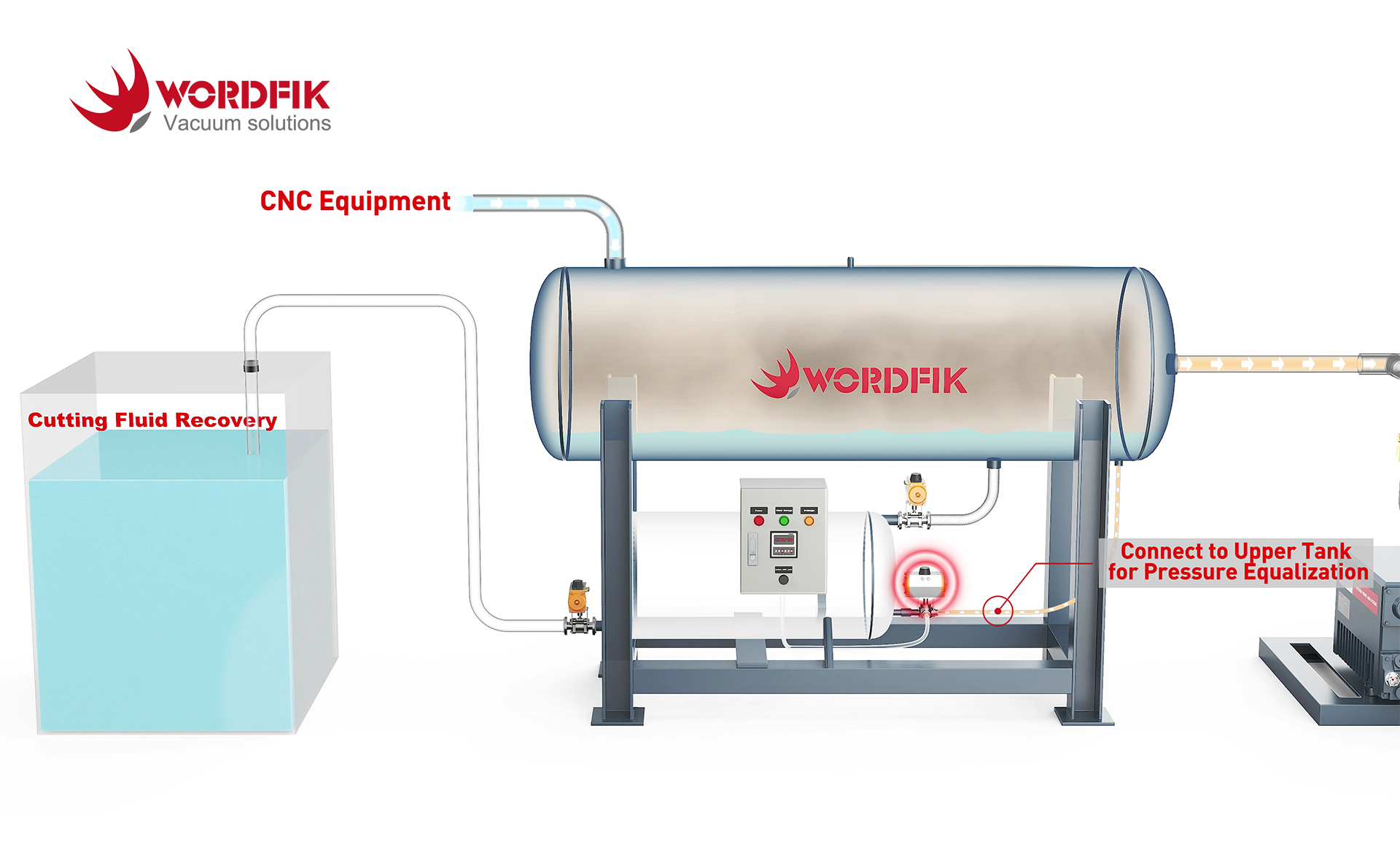
Once the liquid in the secondary tank is fully drained, the discharge valve closes. To prepare for the next cycle, the valve connecting the primary and secondary tanks opens again. This helps to balance the air pressure between the two tanks. Once the pressure stabilizes, the system automatically repeats the entire separation process.
Fully Automated with PLC Intelligent Control
The entire gas-liquid separation process is fully automated, managed by a PLC intelligent control system. There is no need for manual monitoring or intervention. The PLC ensures that valves open and close at the exact right moment, providing continuous, uninterrupted vacuum protection for your equipment.
Customizable Solutions to Fit Your Process
No two factories are exactly the same, and neither are their liquid challenges. The Wordfik gas-liquid separation system can be freely customized according to your actual operational requirements.
For example, we can add an in-line filter before the pump to filter the humid air, further preventing liquid damage and corrosion. Whether you are dealing with cutting fluid, beverages, or high-moisture environments, we can configure the system to handle it.
Wordfik: More Than a Manufacturer, Your Vacuum Solution Provider
At Wordfik, we are not just a vacuum pump manufacturer and seller. We are your vacuum solution provider. Our goal is to provide you with energy-efficient, high-performance vacuum solutions that solve real-world production challenges.
Don't let liquid destroy your vacuum pump. Protect your investment with Wordfik.
FAQ
1. What types of liquids can the Wordfik gas-liquid separation system handle?
The system is designed to handle a wide range of liquids that commonly damage vacuum pumps. This includes water vapor, CNC cutting fluids, beer, juice, and other beverages. As long as the liquid is drawn into the vacuum line during your production process, our system can separate it before it reaches the pump.
2. Does the system require manual monitoring to drain the liquid?
No. The entire process is fully automated. The system uses a liquid level sensor to trigger the drainage valves. Once the liquid in the secondary tank reaches a certain level, the PLC control system automatically opens the discharge valve to drain the fluid into the recovery box, then closes it and equalizes the pressure for the next cycle.
3. Can I customize the system or add extra protection for my specific application?
Yes. Every production line is different, so Wordfik offers fully customizable gas-liquid separation systems. You can tailor the tank sizes and valve configurations to your needs. Additionally, we can add an in-line filter before the vacuum pump to further filter humid air and protect the pump from corrosion and liquid damage.


